
E-commerce
Campus Eats
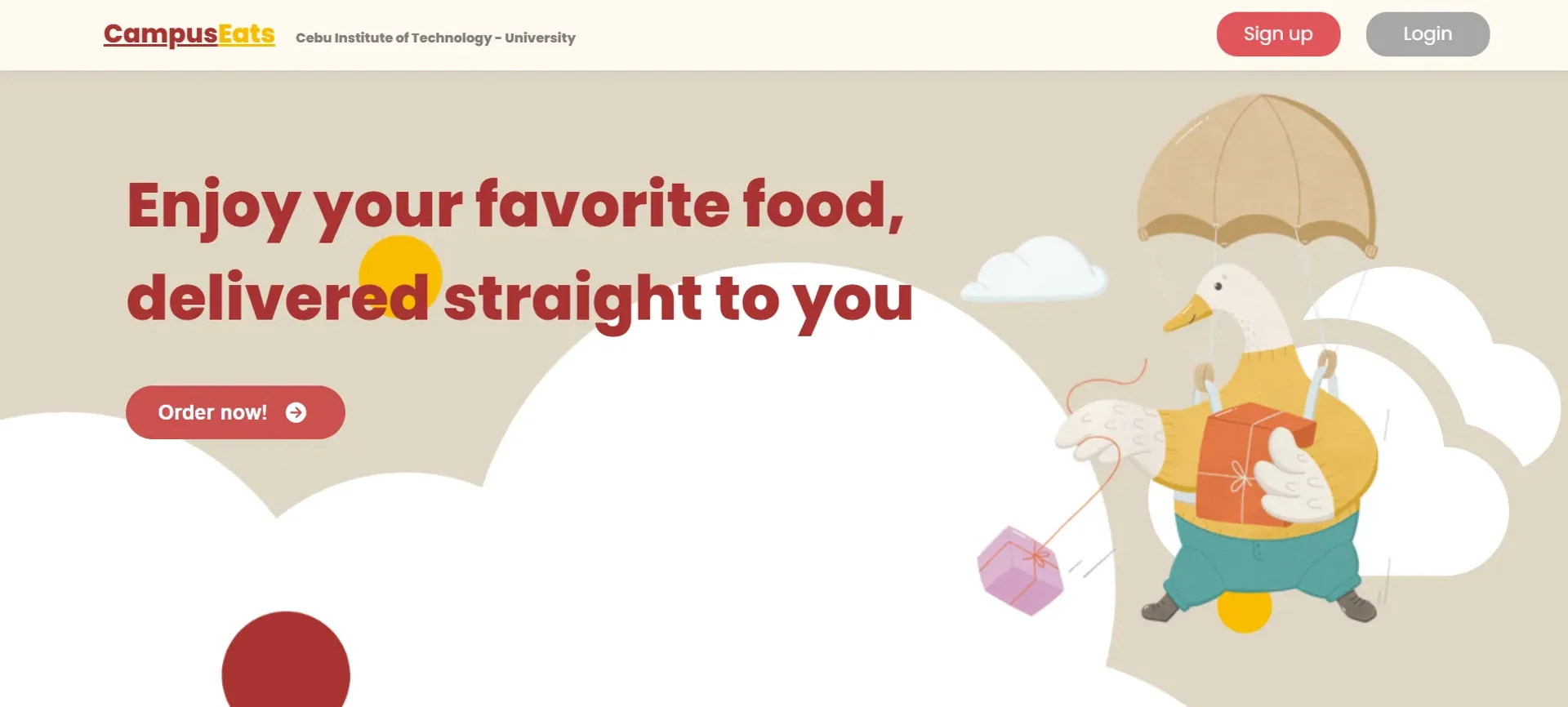
A campus food delivery platform connecting CIT-U students and staff with campus vendors, with real-time order tracking across three user roles.
Year
2024
Role
Full-stack Developer
Client
University capstone
Stack
ReactJS, Spring Boot, MongoDB, Azure, Vercel
01
The problem
CIT-U students and staff struggled to discover, order and receive food from campus vendors efficiently. Campus food options were scattered across different locations with no centralised way to browse menus, place orders or track deliveries. Vendors lacked a digital presence, and the ordering process was fragmented and slow.
02
What I built
Campus Eats is a full-stack delivery platform that unifies the campus food experience. Students browse vendor menus, place orders in real time, and track deliveries from acceptance to arrival. Vendors manage their menus and orders through a dedicated dashboard, and dashers fulfil deliveries with live location tracking.
Decisions the scale demanded
Role-based architecture
Distinct dashboards and permissions for students, vendors and delivery drivers ensure each user type sees only what they need.
Real-time order tracking
Live updates keep users informed from confirmation through delivery, building trust and reducing support requests.
Scalable backend
Spring Boot microservices on Azure handle concurrent orders and users without bottlenecking.
React provided a responsive frontend deployed on Vercel, Spring Boot gave us a production-ready backend, and MongoDB's flexibility made it easy to evolve the data model as requirements changed.
03
What I learned
This capstone taught me the complexity of multi-stakeholder systems: building for three different user types forced thoughtful architecture early. I learned how much real-time features matter for user trust. Order tracking gives users a way to follow delivery progress. If I revisited it, I'd implement smarter logistics with AI-driven dasher assignment, and add analytics dashboards so vendors could optimise pricing and menu strategy.